
Wattle fences are very strong and long-lasting. Willow posts often take root in the ground creating a living fence, perfect for containing animals and enclosing gardens and orchards. And the density of the fence makes an ideal
Monthly Archives: December 2016
 14 DecContinus Reading »
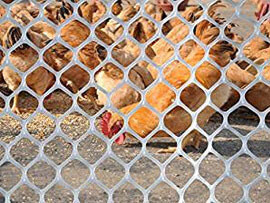 14 DecContinus Reading »
It's possible to use regular wire fencing, but it must be thick enough so they can't shred it (as they would with something like chicken wire. we can advise.) Making sure that the fence is far enough from what you want to protect is crucial as they can reach in and do damage. At the top, it is necessary to bend the fencing outward--away from the pen.
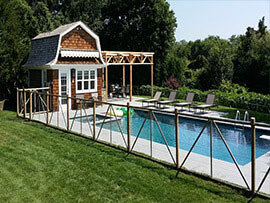 14 DecContinus Reading »
Wattle fences may be one of the oldest types of fencing still in use today. They were used in England long before medieval times. Traditionally the fences are built from straight, slender, flexible suckers or saplings of the willow tree up to 1-1/2" diameter. After the leaves are stripped, the ”withies” are woven between upright wood posts. Willow is an ideal wood because it is pliable and resists splintering. Other species, such as alder, can also be used.
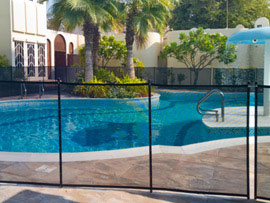 14 DecContinus Reading »
Wattle fences may be one of the oldest types of fencing still in use today. They were used in England long before medieval times. Traditionally the fences are built from straight, slender, flexible suckers or saplings of the willow tree up to 1-1/2" diameter. After the leaves are stripped, the ”withies” are woven between upright wood posts. Willow is an ideal wood because it is pliable and resists splintering. Other species, such as alder, can also be used.
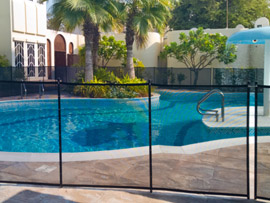 12 DecContinus Reading »
A fence, zigzag in plan, made of rails resting across one another at an angle - according to the Random House Dictionary.